 FishCast AI
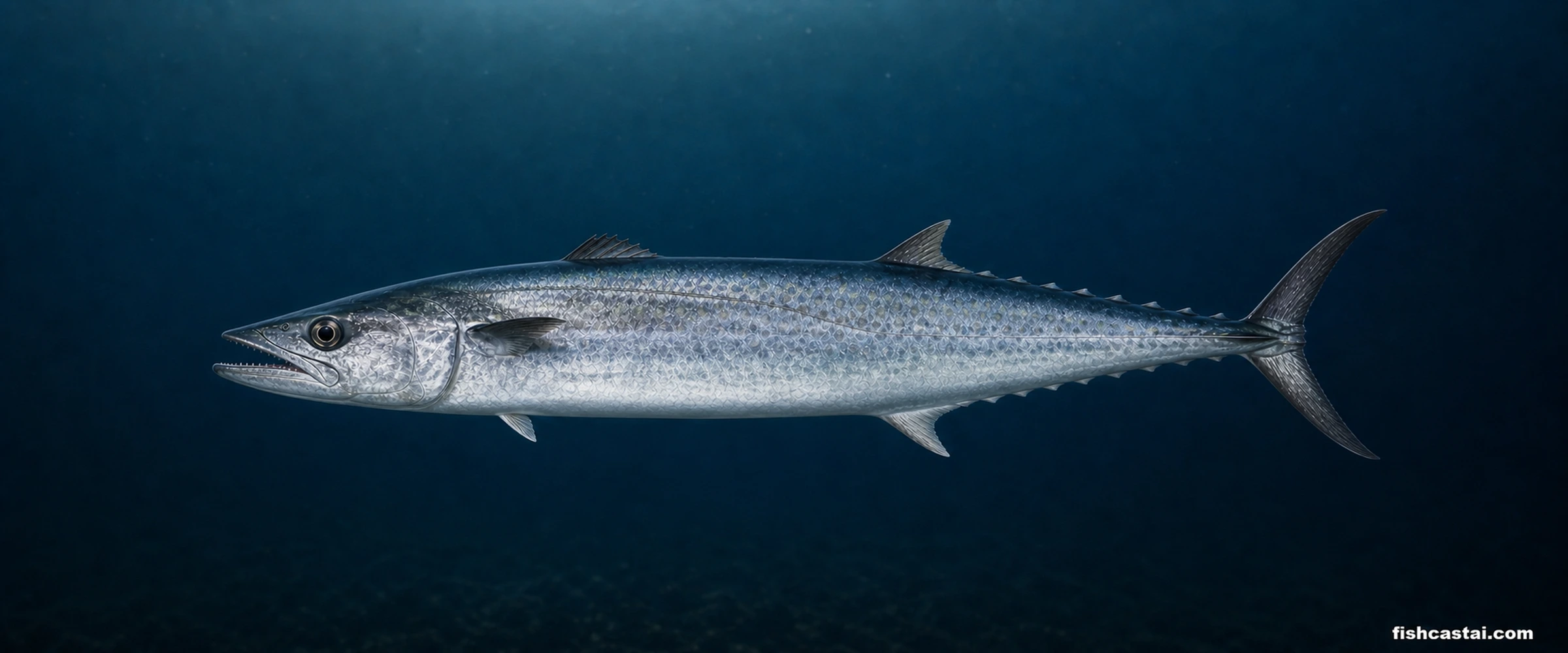
King Mackerel
Scomberomorus cavalla
Also known as: Kingfish, King, Smoker, Cavalla
Start on the cleanest bait-rich reef, wreck, or beach edge in 20 to 29 C water and cover ground with live baits or trolling hardware until you find the active current lane.
Max Length
184cm
Typical trophy size
Max Weight
45kg
Record class
Water Temp
68–84°F
Preferred range
Difficulty
3/5
Skill level
How to catch King Mackerel
Best timing
Fish the spring and fall migration windows, moving current, dawn or overcast periods, and any day when bait stacks tightly over reefs or along the beach.
Spring run · fall run · moving current · low light
Best methods
Slow-trolled live baits, stinger rigs, spoons, planers, diving plugs, and pitch baits are the core king mackerel tools once you locate active bait.
Live bait · stinger rig · spoon · planer
Best presentation
Keep baits swimming naturally at staggered depths and make smooth turns that change speed without blowing the spread out of the strike zone.
Natural bait · staggered depth · smooth turns
Where they hold
Focus on reefs, wrecks, beach bait schools, live bottom, buoy lines, ledges, and color changes where suspended forage is pinned by current.
Reefs and wrecks · beach bait · current edge · suspended forage
Where to fish for King Mackerel
Use state guides to narrow the pattern before checking forecast conditions.
Florida offers the longest kingfish season and strong spring and fall coastal runs.
Florida stands out because king mackerel can be targeted along both coasts and through much of the year, with especially strong action on Atlantic reefs, beach fronts, and Gulf nearshore structure. The state also holds a major pier and small-boat fishery, so anglers can intercept migratory fish closer to shore than in many other states.
View state guideNorth Carolina is a classic smoker-king state built on summer live-bait fishing.
North Carolina’s king mackerel fishery is defined by nearshore reefs, live bottom, and long stretches of beach where bait schools pile up from late spring through early fall. Tournament culture is especially strong here, and anglers often target larger smoker kings by slow-trolling live baits around structure in 40 to 100 feet.
View state guideSouth Carolina kings stack along nearshore reefs and beach bait lines each summer.
South Carolina offers a consistent king mackerel fishery around Charleston, Georgetown, and Hilton Head where nearshore artificial reefs meet warm Gulf Stream-influenced water. Fish are often close enough for small boats to work reef circuits and beach bait schools on the same trip, which makes local mobility a major advantage.
View state guideTexas kingfish key on bait around jetties, rigs, and nearshore Gulf structure.
Texas differs from the Atlantic pattern because oil and gas platforms, jetties, and offshore banks play a much larger role in concentrating king mackerel. The fishery often centers on bait-rich nearshore and mid-shelf structure out of ports such as Galveston, Freeport, Port Aransas, and South Padre rather than long continuous beach migrations alone.
View state guideLouisiana kings follow clean bluewater, bait, and offshore structure around the Delta.
Louisiana’s king mackerel fishery is strongly tied to offshore platforms, the Mississippi River Delta edge, and periods when clean Gulf water pushes close enough to coastal ports. The state can produce very good action, but the bite is more dependent on water color and salinity shifts than in clearer Atlantic reef systems.
View state guideDistribution
Seasonal behavior
Seasonal movement
King mackerel shift north and closer to shore as coastal water warms in spring, then remain spread along beaches, reefs, and live bottom through the warm season wherever bait is concentrated. Fall often produces another strong push as bait schools move, while winter sends many fish back toward south Florida and warmer Gulf zones. The pattern changes quickly when current, temperature breaks, or bait schools reposition, so daily movement can be as important as the broader seasonal migration.
Preferred habitat
King mackerel prefer clear coastal and near-offshore water with abundant forage and enough current to keep bait suspended. Artificial reefs, natural ledges, wrecks, buoy lines, live bottom, and beach fronts are all productive because they gather bait without forcing kings to stay deep or tight to the bottom. The strongest spots usually combine structure, moving water, and room for fish to slash through schools in the upper water column.
Feeding behavior
King mackerel feed on schooling baitfish such as menhaden, threadfin herring, sardines, cigar minnows, and blue runners, and they usually attack by accelerating through bait from the side. They are strongest when forage is pinned high in the water column by current, cloud cover, or a tight structure edge. Because they feed by speed and surprise, a lively bait or clean trolling track usually outperforms a slow bottom-oriented presentation.
What changes the bite
Water in the low 20s C and above, moving current, bait concentration, and defined color or temperature breaks are the clearest king mackerel bite triggers. Flat current and scattered bait usually make fish roam, while windy or overcast periods can keep them feeding higher and more aggressively. Before a trip, check sea-surface temperature, bait reports, and whether the reef or beach edge has enough current to pin forage.