 FishCast AI
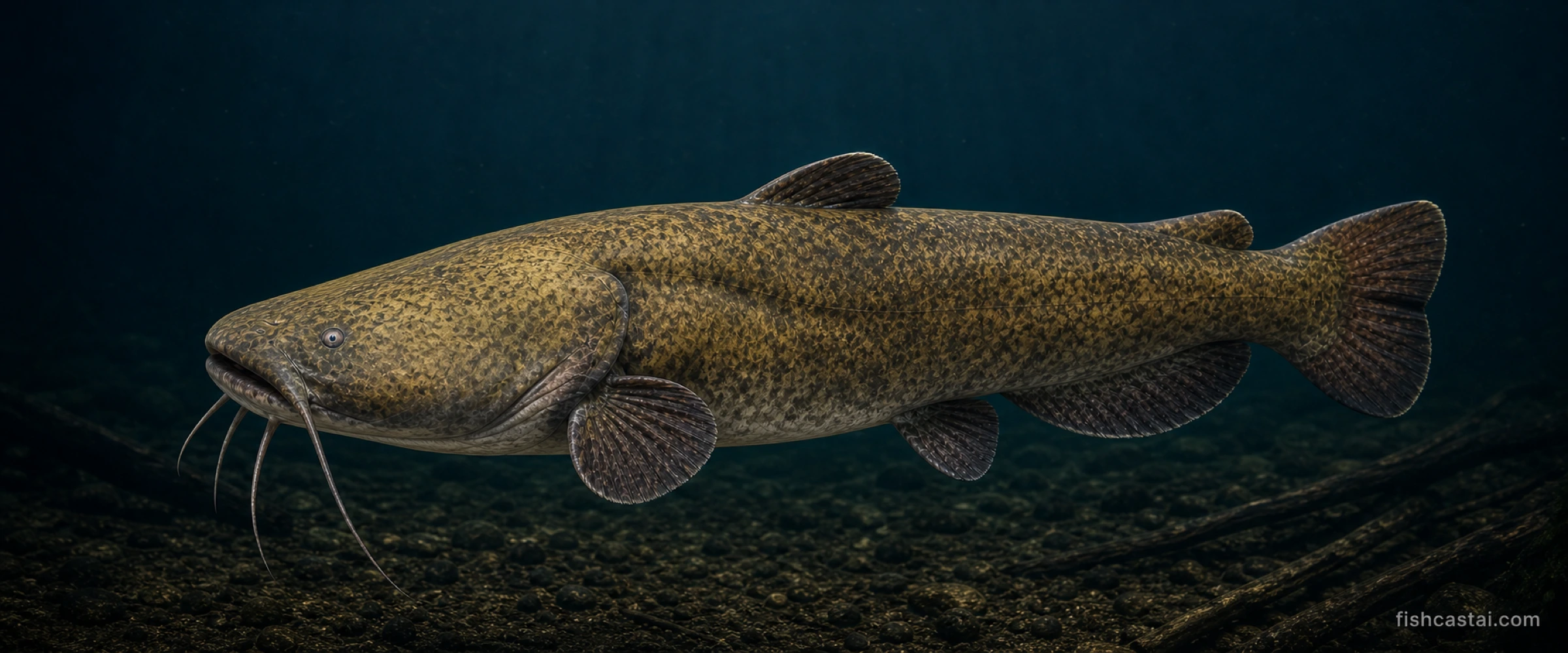
Flathead Catfish
Pylodictis olivaris
Also known as: flathead catfish, flathead cat, yellow cat, mud cat
Put a lively bait beside heavy cover before dark, stay on the best wood-and-depth transition long enough for a cruising fish to commit, and focus your prime effort after sunset.
Max Length
155cm
Typical trophy size
Max Weight
56kg
Record class
Water Temp
68–86°F
Preferred range
Difficulty
4/5
Skill level
How to catch Flathead Catfish
Best timing
Fish warm stable nights, rising current, post-sunset feeding windows, and late spring through summer periods when flatheads leave cover to hunt.
Warm nights · after dark · late spring to summer · current rise
Best methods
Heavy slip rigs, three-way rigs, and suspended live-bait setups around logjams, undercut banks, and deep holes produce the best flathead bites.
Slip rig · three-way rig · live bait · anchored setup
Best presentation
Set the bait tight to cover but clear enough to move naturally, and leave it in the strike zone long enough for a cruising flathead to find it.
Tight to cover · natural movement · long soak · stout tackle
Where they hold
Focus on logjams, undercut banks, deep outside bends, root wads, rock cavities, tailwater holes, and reservoir creek channels with standing timber.
Heavy wood · deep bends · root wads · timber channels
Where to fish for Flathead Catfish
Use state guides to narrow the pattern before checking forecast conditions.
Kansas flathead catfish fishing centers on prairie rivers, woody outside bends, and urban-access river stretches where heavy cover and warm summer nights produce the best trophy shots.
Kansas flatheads are tied closely to river structure rather than open-water reservoir roaming. The strongest pattern runs through the Kansas, Arkansas, Neosho, and connected river systems where logjams, undercut banks, root wads, and deep bend holes give fish secure daytime cover. Once water warms, the same fish slide short distances onto shelves and seams after dark, which is why precise placement matters more than covering a lot of water.
View state guideOklahoma flathead catfish are at their best in warm river systems where woody banks, deep holes, and steady forage support strong nighttime trophy patterns.
Oklahoma combines productive rivers, tailwaters, and catfish-friendly climate, which makes it one of the better southern states for flatheads. The core pattern is still a river one: fish hold tight to logjams, undercut banks, root systems, and deep bends through the day, then ease onto nearby shelves, eddies, and seams after dark. Long warm periods keep this bite going well through summer.
View state guideTexas flathead catfish live in warm rivers, reservoirs, and timbered channels where long growing seasons and abundant forage create a prolonged trophy window.
Texas flatheads differ from northern river fish because they can stay active for long warm stretches. Rivers, reservoir arms, standing timber, and old creek channels all hold fish, but the common thread is still heavy cover tied to depth. By day they bury into wood, cut banks, and channel cover, then slide onto nearby shelves and seams after dark or during low-light current changes.
View state guideMississippi flathead catfish fishing revolves around big-river wood, cut banks, oxbow connections, and deep cover that hold large fish through the hottest months.
Mississippi flatheads are built around heavy-cover river habitat, especially in waters tied to the Mississippi River and large tributaries. The best water combines depth, woody structure, and current variation, letting fish stay hidden through daylight and move short distances to feed after dark. Oxbow connections, outside bends, and root-heavy banks all fit this state pattern well.
View state guideDistribution
Seasonal behavior
Seasonal movement
Flathead catfish winter in deep holes, woody channel bends, and reservoir timber close to the main river channel, then begin moving more once water warms into the low 20s Celsius. Late spring and early summer bring spawning around cavities and heavy cover, followed by the best feeding stretch of the year when fish slide from daytime wood to adjacent shelves and seams after dark. Fall keeps them feeding around the same structure until cooling water pushes them back into deeper wintering cover.
Preferred habitat
Flathead catfish prefer big rivers, tailwaters, and reservoirs with dense wood, deep cover, and a nearby ambush lane. Logjams, root wads, undercut banks, rock cavities, outside bends, and timbered creek channels are prime because they let a large predator hide through the day and move only a short distance to feed. The best spots almost always offer both security and a controlled current edge or flat where prey travels.
Feeding behavior
Flathead catfish hunt live prey more than carrion, feeding on sunfish, bullheads, suckers, and other fish that move around wood, ledges, and current seams. Trophy fish are especially cover-oriented in daylight and usually feed during shorter but more deliberate after-dark windows than channel catfish. Warm stable nights, current shifts, and forage pushed into wood lines are the best signals that a flathead will leave cover aggressively.
What changes the bite
Warm stable water, a small increase in current, and nightfall are the clearest flathead bite triggers because they move prey across ambush cover without pushing big fish out of position. Sudden cold snaps or bright pressure systems usually shorten the feeding window and keep fish buried deeper in cover. When you know a fishy spot is right but the rods stay quiet, upgrading bait quality or shifting the bait a meter along the cover line is usually more effective than abandoning the area immediately.