 FishCast AI
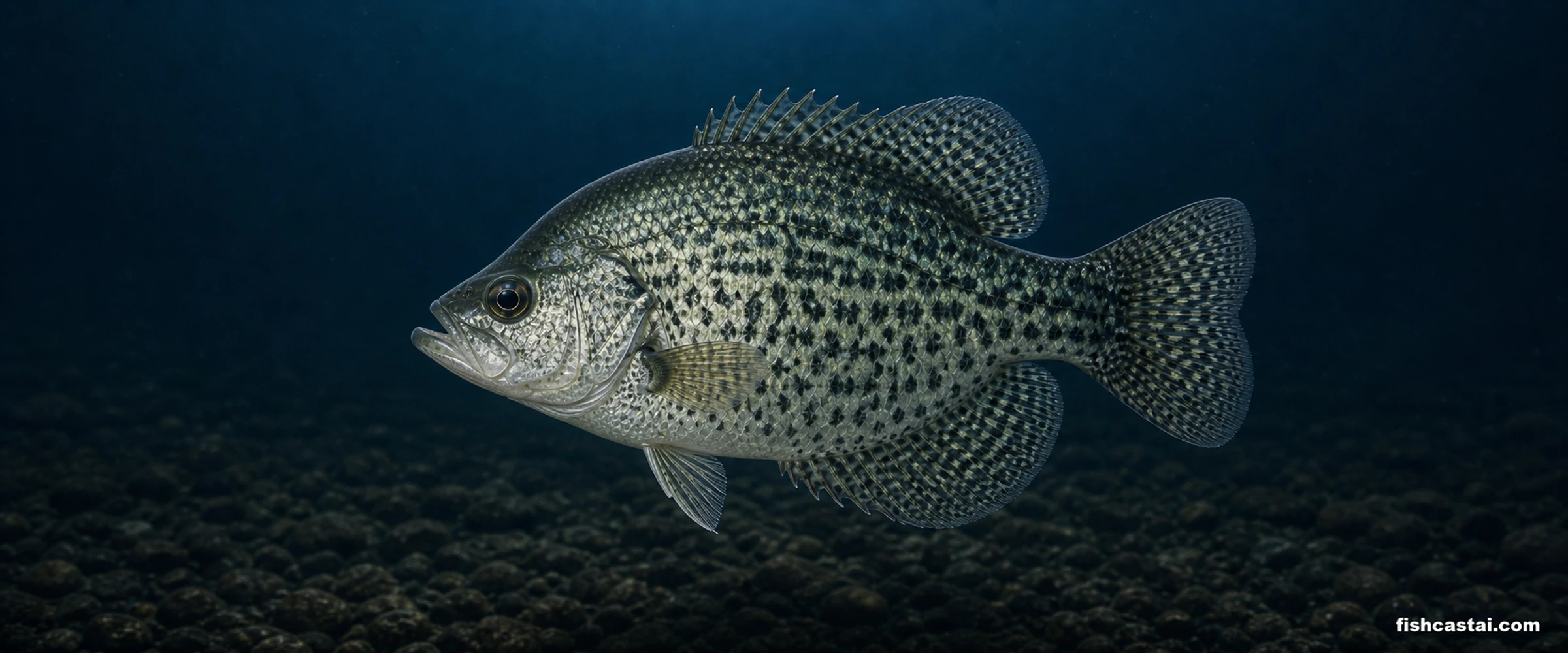
Crappie
Pomoxis spp.
Also known as: crappie, white crappie, black crappie, papermouth, sac-a-lait
Find the school first, hold your bait slightly above it, and repeat the exact depth on every cast around brush, docks, timber, or creek-channel cover.
Max Length
53cm
Typical trophy size
Max Weight
2.7kg
Record class
Water Temp
54–75°F
Preferred range
Difficulty
2/5
Skill level
How to catch Crappie
Best timing
Fish warming spring afternoons, the spawn period, calm summer low-light windows, and winter electronics-driven school patterns over deeper structure.
Spring warmup · spawn · low light · winter schools
Best methods
Minnow rigs, hair jigs, plastics under floats, and vertical jigging all work when they stay at the exact level of the school.
Minnow rig · hair jig · float jig · vertical plastic
Best presentation
Count the bait down, keep it slightly above the fish, and let it pendulum or hover beside brush, docks, and timber with very little extra movement.
Exact depth · above the school · pendulum fall · hover
Where they hold
Focus on brush piles, standing timber, dock posts, bridge pilings, creek-channel turns, stake beds, and shallow spawning cover next to deeper water.
Brush and timber · docks · channel turns · shallow spawn cover
Where to fish for Crappie
Use state guides to narrow the pattern before checking forecast conditions.
Mississippi remains a headline crappie state because the flood-control reservoirs of the north produce heavyweight slab fish and long productive seasons.
MDWFP’s major crappie waters such as Grenada, Sardis, Enid, and nearby systems define the Mississippi pattern: fertile reservoirs, broad spawning flats, heavy spring traffic, and deep winter schools that never fully disappear. The state’s warm climate gives anglers both a strong pre-spawn run and meaningful cold-season fishing when fish stack on channels, brush, and deeper ledges.
View state guideTennessee’s crappie identity is built around TVA reservoirs and classic waters such as Kentucky Lake and Reelfoot, where brush, timber, and spawning flats keep fish available all year.
The Tennessee pattern is broad but consistent: fish use creek channels, timber, stake beds, docks, and shallow spring cover, then slide to deeper brush and structure once the spawn ends. Kentucky Lake and Reelfoot remain emblematic because they combine the two main Tennessee strengths in one state: expansive structure and fishable concentrations through multiple seasons.
View state guideArkansas is a destination crappie state because its clear and fertile reservoirs offer both spring spawning concentrations and dependable deep-cover fish outside the spawn.
Arkansas reservoirs such as Greers Ferry, DeGray, and Ouachita fit the state’s standard crappie setup: timber, brush, creek arms, and enough water clarity variation that fish can use both shallow cover and suspended deep structure. The strongest state pattern is still spring, but Arkansas fish stay catchable much longer if you keep following cover and depth instead of leaving after the spawn peak.
View state guideMissouri’s crappie fishing is anchored by dock, brush, and timber patterns on major reservoirs and Ozark impoundments across a long productive season.
MDC reservoir waters such as Truman, Table Rock, and Lake of the Ozarks give Missouri a strong split personality for crappie: shoreline and dock-oriented spring fishing, then deeper suspended and brush-related summer fish. The state’s best pattern comes from reading cover and seasonal depth shifts correctly, not from relying on one tactic all year.
View state guideTexas crappie fishing benefits from fertile reservoirs and mild winters, giving the state both an early pre-spawn window and strong deep-cover fishing after the spawn.
Texas reservoirs such as Sam Rayburn, Lake Fork, and Toledo Bend hold crappie that move early, feed long, and respond well to channel-edge patterns because winter is relatively short. The state’s clearest identity is reservoir fishing built around creek channels, brush, docks, and warm-season suspended fish rather than natural-lake weed or marsh patterns.
View state guideDistribution
Seasonal behavior
Seasonal movement
Crappie winter in deeper basins, timber, and channel bends, then move toward mid-depth staging cover as water temperatures climb into the low teens Celsius. Spawn-phase fish slide onto brush, reeds, cypress roots, docks, and protected banks in roughly 14-20°C water before falling back to deeper docks, timber, and channel-edge brush after the spawn. Fall concentrates schools around bait-rich creeks and brush, while winter returns them to suspended groups over the nearest structural depth break.
Preferred habitat
Crappie favor reservoirs, lakes, and slow rivers with abundant vertical cover, overhead shade, and easy access to depth. Brush piles, timber, docks, bridge structure, creek channels, and submerged vegetation all concentrate fish because they hold plankton, bait, and ambush edges in one place. The highest-percentage targets usually combine cover with a nearby break so the school can slide up or down without leaving the area.
Feeding behavior
Crappie feed on minnows, young shad, insects, and small crustaceans, usually taking prey above or level with the school instead of diving down to eat. Because they group tightly, one bite often means the rest of the school is holding at the same depth on the same piece of cover. Stable water levels, light wind, and low-light periods improve roaming and bait interception, while sharp fronts make fish hold tighter and feed more vertically.
What changes the bite
Warming water in spring, stable reservoir levels, and bait pushed into brush or docks are the strongest crappie bite triggers. Sudden cold fronts or muddy inflow usually move the school deeper or tighter to the thickest cover, but the fish often stay nearby if the bait remains in the area. When you are around fish without getting bit, changing depth by 0.3-0.6 m is usually more important than changing lure color first.